


Metal Detector Security
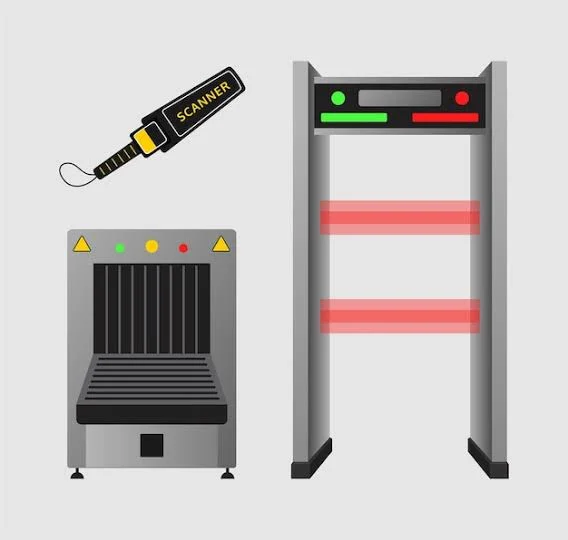
Metal Detector Security
Metal detector security has evolved beyond simple walk-through gates. Today, an effective security plan often integrates metal detection with intelligent video surveillance for a complete security solution. This is where Video Vision Services come into play, providing the critical visual layer that enhances threat detection and verification.
Modern security systems combine two key technologies:
-
Advanced Metal Detection: Walk-through metal detectors (WTMD) and handheld units screen for metallic threats like weapons and contraband . Newer systems even use millimeter-wave technology to detect both metallic and non-metallic items .
-
AI-Powered Video Surveillance: Integrated video analytics, like those from companies specializing in Video Vision Services, use artificial intelligence to analyze CCTV footage in real-time . This can automatically detect suspicious behaviors, track individuals, and verify alarms .
The true power of this integration lies in real-time verification and response . For instance, when a metal detector alarms, an AI video system can instantly pull up the footage of the individual who triggered it, allowing security personnel to assess the situation immediately . This fusion of technologies ensures that security teams can not only detect a potential threat but also identify, verify, and respond to it rapidly and effectively.
Call Video Vision Services to learn how integrated detection and surveillance solutions can provide comprehensive protection for your site
Here are the key benefits of metal detector security, highlighting how they form an effective security system, especially when integrated with video surveillance and access control.
🔍 Pinpoint Accuracy and Efficiency
Modern metal detectors use advanced technology for precise, efficient screening.
-
Multi-Zone Detection: Many walk-through models feature multiple detection zones (up to 66 zones), indicated by LED lights on the detector panel . This pinpoints the exact location of a threat on the body, speeding up secondary checks .
-
High Throughput: A good system can screen over 40 people per minute, minimizing queues and disruption at entry points .
-
Intelligent Discrimination: AI-enabled models can distinguish between harmless items (like belt buckles) and genuine threats (like weapons), significantly reducing false alarms .
🔗 Integration for a Unified Security Ecosystem
The greatest benefit is how seamlessly metal detectors integrate with broader security systems like Video Vision Services.
-
Visual Verification: Integrated systems link the metal detector's alarm to CCTV. When a threat is detected, the system can instantly display live footage of the person on a monitor, providing immediate visual context and evidence .
-
Access Control Integration: Metal detectors can be connected to physical barriers like turnstiles or flap barriers. If a metal object is detected, the barrier remains locked, physically preventing entry or exit .
-
Incident Logging: Systems can record passenger flow, alarm statistics, and even capture facial images for a complete audit trail and forensic evidence .
⚙️ Smart, Adaptable, and Reliable Operation
Today's metal detectors are designed for ease of use and reliability.
-
Self-Calibration: They perform self-diagnosis and calibration on power-up, ensuring they are always operating optimally .
-
Customizable Sensitivity: Security personnel can adjust sensitivity levels (often up to 255 levels) to match the specific threat level of a location .
-
Password Protection: Systems include password protection to prevent unauthorized tampering with security settings .
🛡️ Enhanced Security for Specific Environments
Metal detectors provide targeted solutions for different needs.
-
Loss Prevention (Insider Threat): In warehouses or distribution centers, integrated metal detectors are used for outbound scanning to detect unauthorized removal of tools, electronics, or sensitive data by employees .
-
High-Security Areas: In prisons or the precious metals industry, they can be combined with advanced scanners to detect extremely small metallic objects concealed on a person .
-
Public Venues: At courthouses, airports, and events, they act as the first line of defense, deterring threats and ensuring a visible, proactive security posture
- Free shipping: Available
- In stock: Yes


